
Diamond Education
The Gemstone Guide
How to choose a coloured gemstone for beauty, durability and everyday wear


Shop the Guide
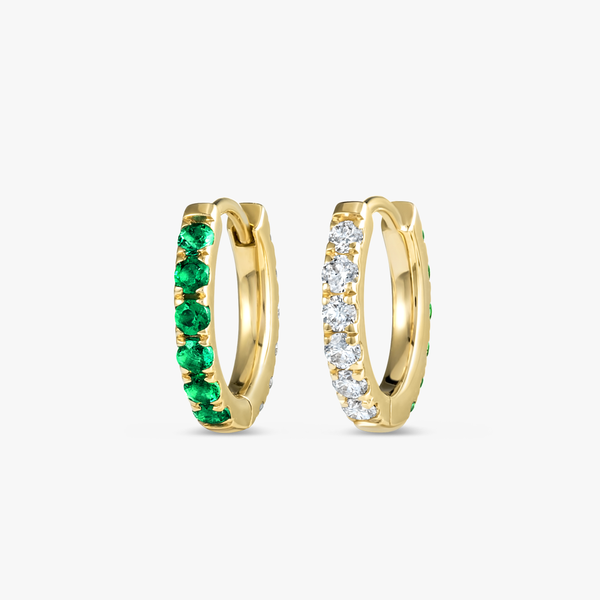


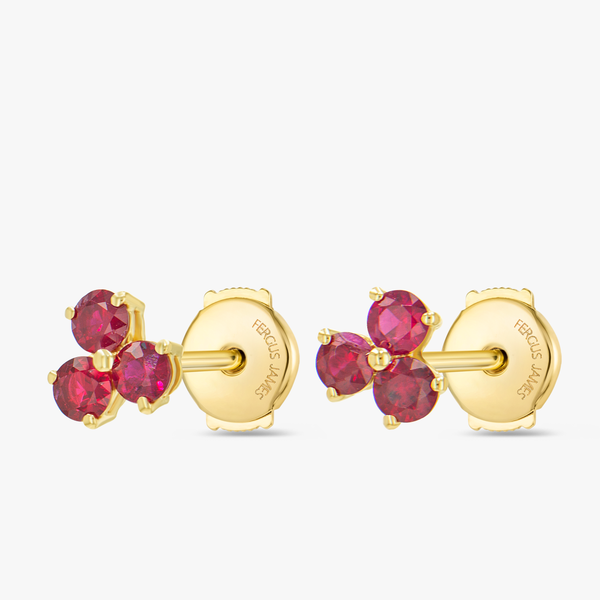
A gemstone is a mineral, rock or organic material valued for its beauty, rarity and suitability for jewellery.
Unlike diamonds, coloured gemstones don't have one universal grading system. Colour is usually the most important quality factor, but clarity, cut, carat weight, durability, treatment and, for certain stones, geographic origin can all influence beauty and value.
Key Takeaways
Colour Comes First
Understand what makes a gemstone rare and valuable, but ultimately choose a colour you genuinely love.
Match the Stone to How You'll Wear It
Hardness matters, but it isn't the same as durability. Consider the gemstone, setting and your lifestyle together.
Disclosure Matters
Treatments aren't automatically negative and origin isn't automatically a sign of quality. What's important is knowing what you're buying.

Colour
Choosing a
Coloured Gemstone
If you're choosing a gemstone for jewellery, we'd start with three questions:
Do you love the colour?
Is the stone suitable for how you'll wear it?
Has its treatment and origin been properly disclosed?
Everything else follows from there.
Factor
Why It Matters
Our Advice
Colour
Usually the biggest influence on beauty and value
Prioritise a colour you genuinely love
Clarity
Inclusions vary considerably between gemstone types
Judge clarity relative to the gemstone
Cut
Influences colour, brilliance and overall appearance
Assess the individual stone, not just its shape
Durability
Determines suitability for everyday wear
Match the stone to how the jewellery will be worn
Treatment
Can affect rarity, care and value
Treatment is acceptable when properly disclosed
Origin
Can influence rarity and value for certain gemstones
Treat origin as one factor, not a guarantee of quality

Gemstone
What Is a
Gemstone?
Most gemstones fall into three broad categories.

Mineral Gemstones
Including sapphire, emerald, ruby, tanzanite and aquamarine - inorganic crystalline materials formed through geological processes.

Organic Gemstones
Such as pearl, which originate from living organisms rather than mineral processes.

Rock Gemstones
Such as lapis lazuli, which are made up of multiple minerals rather than a single mineral crystal.
You may also hear gemstones described as "precious" or "semi-precious."
Traditionally, diamond, ruby, sapphire and emerald were grouped as precious stones, while most others were described as semi-precious.
Today, that distinction is increasingly outdated and isn't a reliable indication of quality or value. An exceptional gemstone outside the traditional "precious" group can be considerably rarer and more valuable than a lower-quality ruby, sapphire or emerald.
What matters is the individual stone.

Colour
Colour
Comes First
With a colourless diamond, the absence of body colour can be desirable. With a coloured gemstone, colour is the entire point.
Gemstone colour is generally considered through three characteristics:
Hue - the basic colour you see: blue, green, red, pink and so on.
Tone - how light or dark that colour appears.
Saturation - the strength or intensity of the colour.
The best colour isn't necessarily the darkest. If a stone becomes too dark, it can lose brightness and appear almost black in certain lighting. At the other end of the scale, a very pale stone may lack the intensity associated with the most sought-after examples.
There are also personal preferences to consider. One person might love a vivid royal-blue sapphire, while another prefers something softer and lighter.
From Our Experience…
Our advice is simple: understand what makes a colour rare and valuable, but choose the colour you actually want to look at every day.
Two gemstones with the same name, size and even geographic origin can look completely different side by side.
That's one of the reasons we'd always rather show you the difference than tell you which one is "better" based purely on a description.

Clarity
Clarity Works Differently
With Coloured Gemstones
Inclusions are much more normal in coloured gemstones than many first-time buyers expect.
Different gemstones also have completely different clarity expectations. Emeralds, for example, commonly contain visible internal characteristics, while a similar level of inclusion might be much less desirable in another gemstone.
This means you shouldn't apply diamond clarity expectations to every coloured stone.
Inclusions can also give trained gemologists useful information when identifying a gemstone and assessing its treatment history or possible geographic origin. However, an inclusion shouldn't be treated by a consumer as proof that a gemstone is natural.
Fergus James Expert Insight
For us, the important question is whether the inclusions detract from the beauty, transparency or durability of the individual stone - not simply whether they exist.

Cut
Cut Matters - But Not in Quite
the Same Way as Diamond Cut
Pictured above: Fergus James 3.2ct Emerald Cut Natural Tanzanite Trilogy ring
With diamonds, cut quality is closely associated with light performance and brilliance.
With coloured gemstones, the cutter has another major consideration: colour.
The orientation, depth and proportions of a gemstone can all influence how its colour appears. A skilled cutter therefore has to balance:
Shape · Visible Size · Colour · Brilliance · Original Rough
Shape can affect perceived colour too. Different facet patterns and proportions influence how colour is concentrated and returned to the eye.
A deeper or more brilliant-style cut may make some gemstones appear more saturated, while a shallower stone can sometimes appear lighter or more washed out.
From Our Experience…
We'd never judge a gemstone shape in isolation.
We consider how the shape, proportions and cut work with the colour of that individual stone.
That's also why two stones of identical carat weight can look completely different.

Gemstone
Understanding Gemstone
Hardness & Durability
Pictured above: Fergus James 3.2ct Emerald Cut Natural Tanzanite Trilogy ring
Every mineral gemstone has a hardness measured using the Mohs scale, which runs from 1 to 10 and describes resistance to scratching.
But there's an important distinction:
Hardness isn't the same as durability.
A gemstone may resist scratches well while still being vulnerable to chipping, breaking, heat, chemicals or sudden changes in temperature.
Overall durability also depends on toughness and stability, as well as how the stone is cut, set and worn.
That's particularly important when choosing a gemstone for an engagement ring or another piece you'll wear every day.
Gemstone
Approx. Mohs Hardness
Everyday Ring Suitability
Diamond
10
Excellent
Ruby
9
Excellent
Sapphire
9
Excellent
Emerald
7.5–8
Suitable with additional care
Aquamarine
7.5–8
Generally good
Tanzanite
6–7
More care required
Opal
5–6.5
Better suited to careful wear
Pearl
2.5–4.5
Better for protected jewellery
These are guidelines rather than rules. The individual stone, its setting and your lifestyle all matter.

Gemstone
Gemstone Treatments:
What Should You Know?
Pictured: Sapphires before and after heat treatment
Treatment isn't automatically a negative. Disclosure is what matters.
Treatments have been used within the gemstone trade for generations to improve characteristics such as colour and apparent clarity. Some are extremely common and widely accepted.
What matters is understanding:
- Whether the gemstone has been treated
- How it has been treated
- Whether that affects how it should be cared for
- Whether the treatment is appropriately reflected in the price
Treatment
Approx. Mohs Hardness
Everyday Ring Suitability
Heat treatment
Sapphire, ruby
Can improve colour and/or clarity
Oil or resin filling
Emerald
Reduces visibility of surface-reaching fissures
Flux-assisted healing
Ruby
Can reduce visibility of fractures during heating
Diffusion treatment
Some sapphires
Alters or enhances colour
Dyeing
Various gem materials
Adds or enhances colour
Fracture filling
Various gemstones
Improves apparent clarity
These treatments aren't all equivalent, which is why simply asking whether a gemstone is "treated" doesn't tell you enough.
Two gemstones that look remarkably similar can have very different rarity and values depending on whether - and how - they've been treated.
Untreated gemstones of exceptional quality can command significant premiums because they're considerably rarer. But that doesn't mean an untreated stone is automatically more beautiful than a treated one.
Fergus James Expert Insight
Our priority is transparency. You should know what you're buying.

Gemstone
Does Gemstone
Origin Matter?
Sometimes - but probably not in the way many buyers initially assume.
Geographic origin can influence the rarity, desirability and value of certain gemstones, particularly ruby, sapphire and emerald.
But:
Origin isn't a quality grade.
A gemstone doesn't automatically become exceptional because it comes from a famous location, and a beautiful stone doesn't become less beautiful simply because it comes from somewhere less prestigious.
Specialist gemological laboratories can sometimes provide an opinion on geographic origin for eligible gemstones by analysing their characteristics and comparing them with known reference material. However, origin can't always be conclusively determined.
From Our Experience…
We treat origin as one part of the story, alongside colour, treatment, rarity and the quality of the individual stone.

Diamonds
Natural, Lab-Grown
& Simulated Gemstones
These terms are often confused, but they mean very different things.
Natural
A gemstone formed through natural geological or biological processes.
Lab-Grown
Created artificially but with essentially the same chemical composition, crystal structure and physical properties as its natural counterpart.
Simulated
A different material chosen because it resembles another gemstone. It may look similar, but it isn't chemically or structurally the same stone.
For example, a laboratory-grown sapphire is still sapphire. A blue material made to look like sapphire but composed of something else is a simulant.
None of these terms should be hidden from a buyer. Just as with treatment, clear disclosure is fundamental.
From Our Experience…
We treat origin as one part of the story, alongside colour, treatment, rarity and the quality of the individual stone.

Certification
What Does a Gemstone
Certificate Tell You?
Coloured gemstone reports work differently from diamond grading reports.
There isn't one universally standardised quality-grading system that assigns every coloured gemstone a straightforward equivalent of diamond grades such as D colour or VS1 clarity.
Depending on the laboratory and gemstone, a report may help establish:
- What the gemstone is
- Whether it's natural or laboratory-grown
- Whether detectable treatments are present
- Its weight and measurements
- In certain cases, an opinion on geographic origin
That's valuable information - but it still can't tell you whether you prefer the colour of one sapphire to another.
Fergus James Expert Insight
The best way to choose a coloured gemstone is to combine reliable laboratory information where appropriate with expert assessment of the individual stone and, whenever possible, side-by-side comparison.

Gemstone
How We Choose
Coloured Gemstones
We don't choose a coloured gemstone by certificate alone.
We start with the colour and overall appearance of the individual stone, then consider its:
Cut · Clarity · Carat Weight · Durability · Treatment · Origin
We also consider what you're actually making.
The best emerald for an occasional cocktail ring may not be the same stone we'd recommend for an engagement ring worn every day.
Likewise, a gemstone that looks spectacular on its own still needs to work with the metal, setting, side stones and overall design of the finished piece.
From Our Experience…
Two sapphires can look similar on paper and completely different when they're next to each other.
We'd always rather show you that difference than simply tell you one is technically better.

Popular
A Guide to Popular
Coloured Gemstones
Below is a quick introduction to some of the gemstones we're most commonly asked about.
If you have something more unusual in mind, Fergus James can also source gemstones specifically for a bespoke piece upon request.

Green Emerald
Emerald is the green variety of beryl and is prized primarily for the quality and intensity of its colour.
Natural inclusions are common and often accepted as part of an emerald's character, so clarity expectations are very different from those applied to diamonds.
At 7.5–8 on the Mohs scale, emerald has good scratch resistance but generally requires more care than sapphire or ruby, particularly for jewellery worn every day.

Sapphire
Sapphire is a variety of corundum and ranks 9 on the Mohs scale, making it one of the more durable coloured gemstones for everyday jewellery.
Although best known for blue, sapphire occurs naturally in a wide range of colours including pink, yellow, green, orange and purple.
Colour is generally the most important consideration, with hue, tone and saturation all influencing appearance and value.

Red Ruby
Ruby is the red variety of corundum, meaning it belongs to the same mineral family as sapphire.
Its colour can range from lighter red through to deep, vivid red, with colour typically having the greatest influence on beauty and value.
Like sapphire, ruby ranks 9 on the Mohs scale and is one of the stronger coloured gemstone choices for regular wear.

Tanzanite
Tanzanite is the blue-to-violet variety of zoisite and is known for its distinctive colour and pleochroism, meaning different colours can be visible when viewed from different directions.
At around 6–7 on the Mohs scale, it requires more care than sapphire or ruby.

Aquamarine
Aquamarine is the blue to slightly greenish-blue variety of beryl - the same mineral family as emerald.
It's known for its clear, watery colour and typically high transparency, with stronger blues generally attracting more interest than very pale stones.
At 7.5–8 on the Mohs scale, aquamarine can work beautifully in rings as well as earrings and necklaces. It's also the traditional March birthstone.
Our take: A great option if you love blue gemstones but want something softer and more understated than traditional blue sapphire.

Amethyst
Amethyst is the purple variety of quartz, ranging from delicate lilac through to deep, saturated violet.
With a Mohs hardness of 7, it's suitable for many types of jewellery, although we'd be more cautious with an engagement ring intended for constant wear.
It's the traditional February birthstone
Our take: Amethyst provides a huge amount of colour and character without the price associated with rarer coloured gemstones.

Alexandrite
Alexandrite is particularly unusual because of its ability to change colour under different lighting.
Fine examples can appear greenish in daylight and shift towards red or purplish-red under warmer incandescent light.
It's a variety of chrysoberyl and ranks 8.5 on the Mohs scale. Natural alexandrite with a strong colour change is also genuinely rare, particularly in larger sizes.
Our take: If you want something genuinely unusual rather than simply a different gemstone colour, alexandrite is one of the most interesting stones we can source.

Citrine
Citrine is the yellow-to-orange variety of quartz, ranging from pale lemon through to warm golden and reddish-orange tones.
Much of the citrine available commercially is produced by heat-treating amethyst, so treatment disclosure is worth understanding.
At 7 on the Mohs scale, it requires more care than sapphire, ruby or diamond.
Our take: Citrine works particularly well when you want warmth and colour without moving into the pricing of rarer yellow gemstones.

Garnet
Garnet isn't one gemstone but a group of closely related minerals.
Although deep red is the colour most people associate with garnet, different varieties can produce orange, pink, purple and even vivid green stones.
One of the most desirable green varieties is tsavorite garnet.
Our take: Don't dismiss garnet based on the traditional red version alone. The family has considerably more variety than most people realise.

Morganite
Morganite is the pink-to-peach variety of beryl, placing it in the same mineral family as emerald and aquamarine.
Its soft blush tones work particularly naturally with rose gold, although white and yellow metals create very different finished looks.
With a Mohs hardness of 7.5–8, it has reasonable scratch resistance.
Our take: Worth considering if you want a soft, romantic colour rather than the stronger saturation of a pink sapphire.

Moonstone
Moonstone is best known for adularescence - the soft, floating glow that appears to move across the stone as it catches the light.
It's considerably softer than sapphire or ruby, so we'd generally favour it for earrings, pendants and carefully worn pieces rather than an engagement ring intended for unrestricted daily wear.
Our take: Moonstone is less about brilliance and more about the unusual way it interacts with light.

Peridot
Peridot is the gem variety of olivine, with colours ranging from yellowish-green through to richer green.
At approximately 6.5–7 on the Mohs scale, it requires a little more care than harder gemstones. It's also the traditional August birthstone.
Our take: Peridot has a distinctive fresh green that looks completely different from emerald. It's well worth comparing the two side by side.

Spinel
Spinel occurs naturally in colours including red, pink, purple, blue and violet.
Red spinel was historically mistaken for ruby, and fine red, pink and cobalt-blue examples can be particularly desirable.
With a Mohs hardness of around 8, spinel also offers good durability for fine jewellery.
Our take: One of the most underrated gemstones - strong colour, good durability and something less expected than ruby or sapphire.

Topaz
Topaz occurs in several colours including colourless, blue, yellow, orange, pink and reddish tones.
It ranks 8 on the Mohs scale, but hardness doesn't tell the whole story: its crystal structure means it can cleave if struck in the wrong direction.
Our take: Topaz offers far more than the familiar blue varieties. We'd start with the colour you want and then explain how treatment, rarity and value differ.

Tourmaline
Tourmaline has one of the widest colour ranges of any gemstone family, appearing in pink, red, green, blue, violet and combinations of multiple colours within a single stone.
Varieties include red-to-pink rubellite and intensely coloured blue-to-green Paraíba tourmaline.
Our take: One of the best places to look if you know the colour you want but aren't fixed on a particular gemstone.

Zircon
Zircon is a natural gemstone in its own right and shouldn't be confused with cubic zirconia, which is a laboratory-made diamond simulant.
Natural zircon occurs in several colours and can show impressive brilliance and fire.
Although reasonably hard, it can be more vulnerable to abrasion and chipping than its hardness alone might suggest.
Our take: Natural zircon is a genuine and fascinating gemstone, particularly if you're looking for strong brilliance in something less commonly seen.
Birthstones by Month
Gemstones can carry personal significance, making birthstones particularly popular for personalised jewellery, gifts and bespoke pieces.
Month
Birthstone
January
Garnet
February
Amethyst
March
Aquamarine
April
Diamond
May
Emerald
June
Pearl, Moonstone, Alexandrite
July
Ruby
August
Peridot
September
Sapphire
October
Opal, Tourmaline
November
Topaz, Citrine
December
Tanzanite, Turquoise, Zircon
Different traditions can vary slightly, particularly where months have more than one recognised birthstone.
Anniversary Gemstones by Year
Anniversary
Gemstone / Tradition
1st
Gold jewellery
5th
Sapphire
10th
Diamond
15th
Ruby
20th
Emerald
25th
Silver jubilee
30th
Pearl
35th
Coral / Emerald
40th
Ruby
45th
Sapphire
50th
Gold jubilee
55th
Emerald / Alexandrite
60th
Diamond jubilee
This follows a commonly used jewellery-industry anniversary tradition. Lists can vary slightly by source and region.
Frequently Asked Questions
Colour is usually the most important factor, but value can also be influenced by clarity, cut, carat weight, rarity, treatment and, for certain gemstones, geographic origin.
There isn't one specification that determines quality across every gemstone, which is why the individual stone matters so much.
Sapphire and ruby are among the strongest coloured gemstone choices for jewellery worn every day, particularly engagement rings.
Other gemstones can also be suitable, but hardness isn't the only consideration. Toughness, stability, inclusions, setting and lifestyle all affect how a piece should be worn and cared for.
Yes, for the right person.
Sapphires and rubies in particular combine colour and character with excellent durability for everyday wear. Emeralds are another beautiful option but require a little more care.
Ultimately, it's about the look, meaning and personality you want the ring to have.
Not necessarily.
Natural and laboratory-grown gemstones have different origins and rarity, but both can be beautiful. The important thing is knowing exactly what you're buying.
Yes.
Coloured gemstones are a genuine part of our bespoke offering, whether you're looking for a particular gemstone, colour, shape, size or something more unusual.
We can source stones specifically for the piece and help you compare them based on both their gemological characteristics and how they'll work within the finished design.