
Diamond Education
Pink Sapphire Guide
How to choose a pink sapphire based on colour, clarity, origin, treatment and durability


Shop the Guide



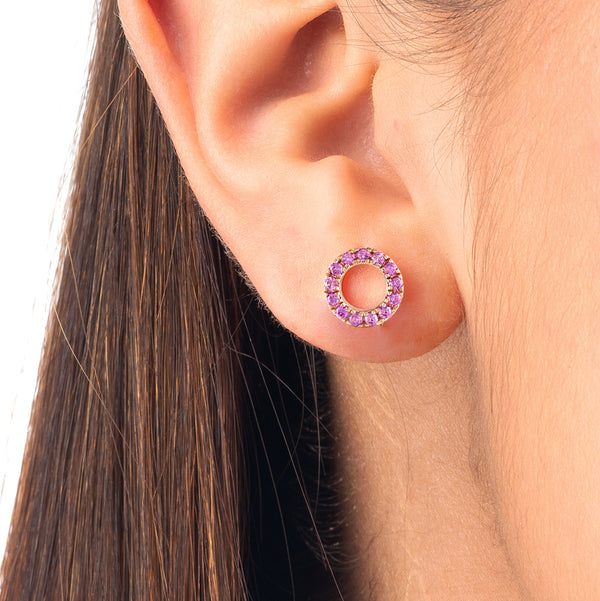
Elegant, distinctive and available in an incredible range of shades, pink sapphires have become a popular alternative to traditional white diamonds and much rarer pink diamonds.
Their colour can range from delicate blush pink to vivid, intense pink, giving each stone its own personality.
Whether you're considering a pink sapphire engagement ring, earrings, pendant or bespoke piece, understanding colour, clarity, cut, treatment and origin will help you choose with confidence.
Key Takeaways
Colour Comes First
Pink sapphire ranges from delicate pastel shades through to intense, vivid pink, sometimes with purple or orange undertones. Choose the pink you actually love.
Treatment Isn't Automatically Negative
Heat treatment is common and widely accepted. What matters is understanding how the sapphire has been treated and ensuring it's properly disclosed.
Look Beyond Specifications
Two pink sapphires with similar specifications can look completely different. We'd always choose based on the beauty of the individual stone.

Colour
What Is a Pink Sapphire?
Pink sapphire is a pink variety of corundum, the same mineral family as blue sapphire and ruby. Its colour is primarily associated with traces of chromium within the crystal.
Pink sapphires occur across a broad spectrum, from pale blush and pastel pink through to vivid pink and magenta. Some also display secondary purple or orange tones.
Natural pink sapphires are found in several parts of the world, including Sri Lanka, Madagascar and Myanmar, as well as parts of East Africa.
Fergus James primarily sources natural pink sapphires from Sri Lanka, a country renowned for producing exceptional coloured sapphires.

Value
What Makes a Pink Sapphire Valuable?
Pink sapphires don't have a standardised quality-grading system equivalent to diamonds.
Colour, clarity, cut and carat weight all matter, alongside treatment and origin - but for us:
Colour comes first.
Colour
Pink sapphires range from soft pastel pink through to rich, vivid pink and magenta, sometimes with secondary purple or orange tones.
When comparing colour, we'd consider:
Hue - the actual pink and any secondary colour.
Tone - how light or dark the pink appears.
Saturation - the strength or intensity of the colour.
Strong, vibrant colours can be particularly valuable, but there isn't one shade everyone should choose.
Some people love an intense vivid pink, while others prefer a softer blush tone.
From Our Experience…
Understand which colours are rarer, but choose the pink you actually love.
Clarity
Natural pink sapphires commonly contain inclusions.
We'd focus on whether they're visible to the unaided eye or affect the gemstone's beauty, transparency or durability.
Fergus James Expert Insight
For jewellery, we'd generally rather choose a beautiful sapphire that's clean to the eye than chase unnecessary levels of microscopic clarity.
Cut
Cut influences a pink sapphire's colour, brightness and visible size.
Unlike diamonds, sapphires don't have a universally applied cut grade. The cutter has to balance proportions and light return with the colour and characteristics of the individual stone.
Depth can also influence perceived colour. A deeper cut may concentrate colour in a lighter sapphire, while a shallower cut can sometimes introduce more light into a darker stone.
Oval, cushion and round pink sapphires are particularly popular, although pear, emerald and other shapes can also look beautiful.
We'd ultimately assess how the shape, proportions, cut and colour work together.
Carat Weight
Carat measures weight, not visible size.
Two pink sapphires of the same carat weight can appear noticeably different depending on their shape and proportions.
As size increases, fine natural pink sapphires with exceptional colour become increasingly rare.
From Our Experience…
We'd rather choose a smaller sapphire with beautiful colour and brightness than prioritise carat weight alone.

Pink vs Ruby
What's the Difference Between a
Pink Sapphire and a Ruby?
Pink sapphire and ruby are closely related because both are varieties of corundum, with chromium contributing to their colour.
The distinction comes down largely to colour.
Once red corundum displays sufficient red colour to be classified as ruby, it's no longer described as pink sapphire.
However, the boundary between a deeply saturated pink sapphire and a lighter ruby isn't always as straightforward as it might sound.
Gemological laboratories assess the stone's colour to determine the appropriate identification, and conventions can vary.
For customers, the distinction is much simpler:
Pink Sapphire → Pink colour range
Ruby → Red colour range

Origin
Where Do Pink Sapphires Come From?
Sri Lankan Pink Sapphires
Sri Lanka, historically known as Ceylon, has produced exceptional sapphires for centuries and is particularly well known for the diversity and beauty of its coloured sapphire deposits.
Fergus James primarily sources natural pink sapphires from Sri Lanka, selected for their colour, brightness and individual character.
Madagascar & Other Origins
Madagascar became a particularly important source of pink sapphire following significant discoveries in the 1990s, increasing the availability of natural pink sapphires internationally.
Pink sapphires are also found in Myanmar and parts of East Africa, among other locations.
Fergus James Expert Insight
Unlike certain exceptional blue sapphires or Colombian emeralds, geographic origin isn't usually the first thing we'd use to judge a pink sapphire.
Colour, transparency, treatment and the overall beauty of the individual stone matter more to us than the name of its source.

Treatments
Are Pink Sapphires Treated?
Many natural pink sapphires available within the jewellery market have been heat treated to improve their colour and/or apparent clarity.
Heat treatment is an established and widely accepted practice within the sapphire trade.
Treatment isn't automatically a negative - proper disclosure is what matters.
Other forms of treatment can also exist, so we'd want to understand what treatment has been used and whether it has been appropriately disclosed.

Padparadscha Sapphire
What Is a Padparadscha Sapphire?
Padparadscha is an exceptionally rare and highly prized variety of sapphire displaying a distinctive combination of pink and orange.
The name is traditionally associated with the colour of a lotus blossom, and Sri Lanka is historically one of its most famous sources.
Not every pink-orange sapphire qualifies as Padparadscha. The colour range is relatively specific, and for significant stones we'd want the description supported by an appropriate gemological laboratory.
Fergus James Expert Insight
It's a particularly interesting choice for someone who loves pink sapphire but wants something even more unusual.

Diamonds
Natural or Lab-Grown Pink Sapphire?
Pictured above: Recently Made Fergus James 8 Carat Natural Pink Sapphire Tennis Bracelet
Both natural and laboratory-grown pink sapphires are sapphire.
Rather than choosing a sapphire simply because of its origin, carat weight or description, we assess the individual stone and how it will work within the finished piece of jewellery.
Natural Pink Sapphire
Forms through geological processes within the Earth and is valued partly for its natural formation and rarity.
Lab-Grown Pink Sapphire
Created in controlled environments and has essentially the same chemical composition, crystal structure and physical properties as its natural counterpart.
The fundamental difference is origin and rarity.
Some buyers value the natural formation and rarity of mined sapphire, while lab-grown pink sapphire can provide a similar type of appearance at a different price point.
Neither should be confused with a simulant, which is a different material made to resemble pink sapphire.
Our Pink Sapphires
Fergus James primarily sources natural pink sapphires from Sri Lanka, selected for their colour, brightness and individual character.
Rather than choosing a sapphire simply because of its origin, carat weight or description, we assess the individual stone and how it will work within the finished piece of jewellery.

Certification
Does a Pink Sapphire Need a Certificate?
Not every pink sapphire will be accompanied by an independent gemological report, particularly smaller stones used within jewellery.
For significant natural sapphires, however, a specialist laboratory report can provide useful information such as:
- Whether the gemstone is natural or laboratory-grown
- Whether detectable treatments are present
- Its weight and measurements
- In certain cases, an opinion on geographic origin
For exceptional untreated stones or sapphires represented as Padparadscha, independent laboratory information can become particularly important.
What a report can't tell you is which shade of pink you'll find most beautiful.
Fergus James Expert Insight
We see laboratory information as an important tool where appropriate - not a substitute for assessing the individual gemstone.

Durability
Is a Pink Sapphire Suitable for Everyday Wear?
Yes.
Pink sapphire ranks 9 on the Mohs scale, making it one of the hardest natural gemstones and an excellent option for jewellery intended for frequent wear.
This makes it particularly well suited to engagement rings, where durability is an important consideration.
Like any gemstone, sapphire isn't indestructible and can still be damaged by a significant impact.
The individual stone, setting and wearer's lifestyle should therefore still be considered.

Jewellery
Which Jewellery Suits Pink Sapphires Best?
Pink sapphires work beautifully across many types of fine jewellery:
Engagement Rings · Eternity Rings · Earrings · Pendants · Bracelets
For rings, they work particularly well in solitaire, halo, three-stone and diamond-accented designs.
Colourless diamonds can provide a strong contrast and make the pink centre stone appear even more prominent.

Metal
Which Metal Looks Best With a Pink Sapphire?
There's no universally best choice.

Rose Gold
Creates a warm, romantic combination and can complement softer pink tones beautifully.

White Gold & Platinum
Provide greater contrast, often making a vivid pink sapphire stand out more strongly.

Yellow Gold
Creates a warmer and more distinctive contrast with pink.
From Our Experience…
We'd choose the combination according to the individual sapphire, overall design and your personal preference rather than treating one metal as technically superior

Colour
Pink Sapphire vs Pink Diamond
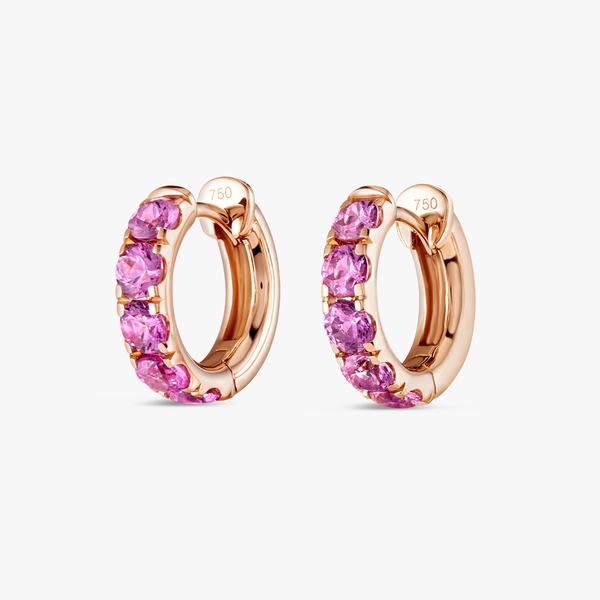
Pictured above: Fergus James Pink Sapphire Classic Huggie Earrings Rose Gold
Pink sapphires and pink diamonds are completely different gemstones, but we often speak to clients who discover pink sapphires while initially looking at pink diamonds.
Pink Sapphire
Pink Diamond
Material
Corundum
Diamond / crystallised carbon
Colour
Soft pastel to vivid pink
Natural fancy pink
Appearance
Rich, saturated colour
Greater brilliance and fire
Natural rarity
Rare
Exceptionally rare
Price
Generally more accessible
Can command extraordinary prices
Durability
9 Mohs
10 Mohs
Natural pink diamonds are among the rarest coloured diamonds in the world and can command extraordinary prices. Natural pink sapphires are generally much more accessible, while still providing beautiful, naturally occurring pink colour.
They also have a different appearance and character. Diamonds are known for their brilliance and fire, while pink sapphires tend to create a richer, more saturated expression of colour, ranging from soft romantic pastels to incredibly vivid pinks.
From Our Experience…
Clients are often surprised by how much colour and presence a natural pink sapphire can provide at a considerably more accessible price point. But we wouldn't think of pink sapphire simply as a cheaper substitute for pink diamond - it's a beautiful gemstone in its own right.
If your priority is the rarity and optical character of a diamond, a pink diamond is unique. If your priority is beautiful pink colour, durability and greater flexibility in size and budget, pink sapphire can be an exceptional choice.
Two pink sapphires with similar specifications can also look completely different. In our showroom, we can compare individual stones in person. For customers purchasing remotely, we provide detailed photographs, videos and side-by-side comparisons to help you compare their colour and overall appearance.
The aim is to find the pink you genuinely love rather than recommend a stone based purely on a description or certificate.
Meaning
The Meaning of Pink Sapphire
Blue sapphire has traditionally been associated with loyalty, wisdom, honesty and lasting commitment, helping make it a meaningful choice for engagement and anniversary jewellery.
It's also the September birthstone and traditionally associated with the 5th and 45th wedding anniversaries.
These associations can add personal meaning, but we'd still recommend choosing sapphire first and foremost because you love the gemstone itself.

Aftercare
How to Care for Pink Sapphire Jewellery
Pink sapphire is highly durable, but fine jewellery still benefits from sensible care.
Remove pink sapphire jewellery before:
- Exercising or playing sport
- Strenuous manual work
- Activities where it could receive a significant impact
- Using harsh chemicals
Store pieces separately to reduce unnecessary contact with other jewellery.
Warm water, mild soap and a soft brush may be suitable for many untreated or heat-treated sapphires, but care requirements can differ depending on treatment and the overall jewellery design.
Frequently worn rings should also be periodically inspected for setting security.
Frequently Asked Questions
Fine pink sapphires are generally prized for strong, attractive colour and good saturation, with vivid pinks often commanding particular interest.
However, there isn't one shade everyone should choose. A softer pastel pink can be just as beautiful for the right piece of jewellery.
Natural pink sapphires are relatively rare, although significant discoveries in Madagascar during the 1990s made them more widely available.
Exceptional untreated stones with vivid colour can still be particularly rare.
Yes. Pink sapphire ranks 9 on the Mohs scale, giving it excellent resistance to scratching and making it one of the strongest coloured gemstone choices for an engagement ring intended for everyday wear.
No. They're completely different gemstones.
Pink sapphire is a variety of corundum, while diamond is crystallised carbon. Both can display beautiful pink colour, but they differ considerably in rarity, optical appearance and price.
Many natural pink sapphires are heat treated to improve their colour and/or apparent clarity.
This is an established practice within the sapphire trade. Untreated fine-quality pink sapphires can be rarer and more valuable, but treatment itself isn't automatically negative - proper disclosure matters most.
Both are varieties of corundum and can owe their colour to chromium.
The distinction is primarily colour: pink material is classified as pink sapphire, while sufficiently red corundum is classified as ruby.
The boundary can sometimes require professional gemological assessment.