
Diamond Education
Tanzanite Guide
How to choose tanzanite based on colour, clarity, cut, treatment and durability


Shop the Guide
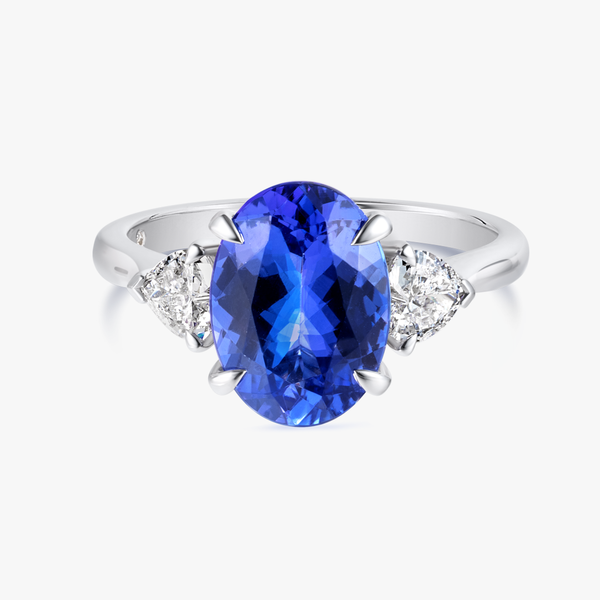

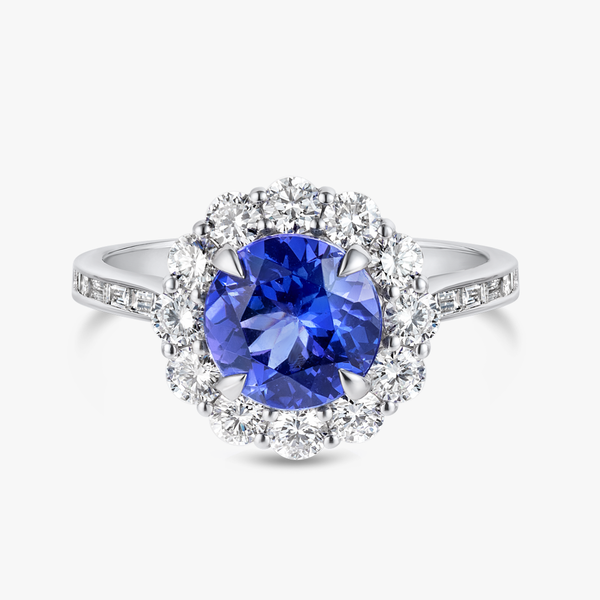

Tanzanite is one of the world's most distinctive coloured gemstones. Prized for its blue-violet colour, strong pleochroism and extraordinary geographic rarity, it was only discovered in the 20th century and is found in one commercial mining area in the world.
Whether you're considering a tanzanite ring, earrings, pendant or bespoke piece of jewellery, understanding colour, clarity, cut, treatment and durability will help you choose with confidence.
Key Takeaways
Colour Comes First
The finest tanzanites generally display a rich blue-violet or violet-blue colour with strong saturation and good brightness.
Expect the Colour to Change
Tanzanite is strongly pleochroic, meaning its colour can appear different depending on the viewing angle and lighting.
Consider How You'll Wear It
At around 6–7 on the Mohs scale, tanzanite requires more care than sapphire, ruby or diamond, particularly when worn in rings.

Colour
What Is Tanzanite?
Pictured above: Fergus James 3ct Oval Tanzanite Trilogy Ring White Gold
Tanzanite is the blue-to-violet variety of zoisite.
It was discovered in northern Tanzania in 1967 and named after the country where it was found. Unlike many other important gemstones, tanzanite has only one known commercial source: the Merelani Hills near Mount Kilimanjaro.
That extremely limited geographic source is one of the characteristics that makes tanzanite so unusual.
Tanzanite is also one of the modern December birthstones, alongside turquoise and zircon, and is associated with the 24th wedding anniversary.

Value
What Makes Tanzanite Valuable?
Pictured above: Fergus James 13 Carat Natural Tanzanite Tennis Bracelet
Tanzanite doesn't have a universally standardised quality-grading system equivalent to diamonds.
Colour, clarity, cut and carat weight all matter - but for us:
Colour comes first.
Colour
Fine tanzanite is prized for its rich violet-blue to blue-violet colour.
The most valuable stones generally display strong saturation and enough brightness for the colour to remain vivid rather than overly dark. Paler examples are more common and typically less valuable.
When comparing colour, we'd consider:
Hue - whether the stone leans more blue or violet.
Tone - how light or dark it appears.
Saturation - the strength or intensity of the colour.
There's no single shade everyone should prefer. Some people are drawn to a more sapphire-like blue, while others prefer a stronger violet character.
From Our Experience…
Understand which colours are rarer, but choose the blue-violet balance you actually love.
Clarity
Fine tanzanite is generally expected to appear clean to the unaided eye.
Eye-visible inclusions can reduce value, particularly in lighter-coloured stones where they're easier to notice.
Fergus James Expert Insight
For jewellery, we'd focus on whether inclusions affect the stone's beauty, transparency or durability, rather than chasing unnecessary microscopic clarity.
Cut
Cut has a major influence on tanzanite because it affects colour, brightness and visible size.
Tanzanite is strongly pleochroic, so the cutter can influence whether the finished stone appears more blue or more violet depending on how the rough is oriented.
Oval and cushion cuts are particularly common, although tanzanite is available in many shapes.
We'd ultimately judge how the shape, proportions, cut and colour work together, rather than choosing a shape in isolation.
Carat Weight
Carat measures weight rather than visible size.
Larger tanzanites can show deeper colour more readily than smaller stones, while smaller stones are often lighter in tone.
That doesn't mean bigger is automatically better.
From Our Experience…
We'd rather choose a smaller tanzanite with attractive colour, brightness and proportions than prioritise carat weight alone.

Colour
Why Does Tanzanite Change Colour?
One of tanzanite's most distinctive characteristics is pleochroism.
This means the gemstone can display different colours when viewed from different crystal directions. In tanzanite, those colours can include blue and violet, as well as yellow-green or brownish tones in untreated material.
Lighting also affects how the stone appears.
Cooler daylight-style lighting → can emphasise blue
Warmer lighting → can bring out more violet or purple
As a result, the same tanzanite can appear noticeably different throughout the day.
Fergus James Expert Insight
This changing appearance isn't a flaw - it's part of tanzanite's character.
When selecting a stone, we'd consider how its colour behaves across different lighting conditions and viewing angles rather than judging it from one fixed view.

Treatment
Is Tanzanite Heat Treated?
Most tanzanite available in the jewellery market has been heat treated.
Untreated tanzanite rough can contain yellow-green or brownish colour components. Heating typically reduces those tones and strengthens the blue and violet colours associated with fine tanzanite.
Heat treatment is widely accepted within the trade and isn't automatically a negative.
What matters is disclosure.
You should understand whether a stone has been treated and what effect that treatment has had on its appearance.
Naturally blue, unheated tanzanite exists but is considerably less common.

Origin
Where Does Tanzanite Come From?
Tanzanite has an unusually simple origin story:
It comes from one place.
Commercially mined tanzanite is found only in the Merelani Hills in northern Tanzania, near Mount Kilimanjaro.
That makes its geographic origin fundamentally different from sapphire, ruby or emerald, which are mined in multiple countries.
Our Tanzanites
Fergus James sources natural tanzanite from Tanzania, selecting individual stones for their colour, transparency, proportions and overall beauty.
Rather than selecting a stone simply because of carat weight, we'd focus on the individual colour, cut and character of the gemstone.

Certificate
Does Tanzanite Need a Certificate?
Not every tanzanite will be accompanied by an independent gemological report, particularly smaller stones used within jewellery.
For significant stones, however, a laboratory report can help establish information such as:
Whether the gemstone is natural
Its weight and measurements
Whether detectable treatment is present where relevant
Basic gemological identification
Because tanzanite has only one commercial source, geographic-origin reporting is generally less of a buying issue than it is for emerald, ruby or sapphire.
Fergus James Expert Insight
A report can describe the gemstone, but it can't tell you whether you prefer one stone's blue-violet balance to another.

From Our Experience
One of the most appealing things about tanzanite is that it rarely looks exactly the same twice.
Depending on the lighting, viewing angle and cut orientation, a stone can shift between blue, violet and deeper purple tones. That changing appearance is a genuine part of tanzanite's character rather than a flaw.
Some clients initially compare it with blue sapphire, but the two have very different personalities. Tanzanite tends to show a more fluid blue-violet character, while sapphire often presents a more stable blue.
Our specialists can help you visually compare individual stones, focusing on differences in colour, saturation, brightness and overall appearance to find the tanzanite that best suits your preference.
The individual gemstone matters more than its description or specifications alone.

Durability
Is Tanzanite Suitable for Everyday Wear?
It can be, but it requires more care than sapphire, ruby or diamond.
Tanzanite ranks around 6–7 on the Mohs scale, meaning it's more vulnerable to scratching than many gemstones commonly chosen for everyday rings.
Hardness also isn't the only consideration. Tanzanite can be vulnerable to impact and sudden temperature changes, so we'd be more cautious with it in jewellery that's exposed to frequent knocks.
Earrings & Pendants
Usually less of a concern because the gemstone is naturally more protected from everyday impact.
Rings & Engagement Rings
Tanzanite can be used, but the setting, individual stone and wearer's lifestyle become more important.
For a ring intended for frequent wear, we'd generally favour a more protective design and sensible care.

Jewellery
Which Jewellery Suits Tanzanite Best?
Tanzanite can look beautiful across many types of fine jewellery:
Rings · Earrings · Pendants · Bracelets
Because of its durability, we'd generally be most relaxed using tanzanite in earrings and pendants, where the stone is naturally less exposed to impact.
For rings, protective designs and sensible wear become more important.
Tanzanite also pairs particularly well with colourless diamonds, which can create contrast and emphasise its blue-violet colour.

Metal
Which Metal Looks Best With Tanzanite?
Pictured above: Fergus James 12ct Natural Tanzanite Tennis Bracelet Yellow Gold
There's no universally best choice.

White Gold & Platinum
Create a cool, clean contrast that works naturally with tanzanite's blue and violet tones.

Yellow Gold
Introduces a warmer contrast and can make the stone's colour appear particularly vivid.

Rose Gold
Creates a softer and more unusual combination.
Fergus James Expert Insight
We'd choose according to the individual tanzanite, overall design and your personal preference rather than treating one metal as technically superior.

Tanzanite vs Blue Sapphire
Tanzanite vs Blue Sapphire
Tanzanite and blue sapphire can both provide beautiful blue colour, but they're very different gemstones.
Tanzanite
Blue Sapphire
Colour
Blue-violet / violet-blue
Primarily blue
Colour behaviour
Strongly pleochroic
Generally more stable
Mohs hardness
Around 6–7
9
Origin
One commercial source
Multiple global sources
Everyday wear
Requires more care
Highly suitable
Character
Changing blue-violet appearance
More consistent blue appearance
From Our Experience…
If durability is your main priority, we'd generally favour sapphire.
If you're drawn to tanzanite's changing blue-violet character and extraordinary geographic rarity, it offers something sapphire doesn't replicate.
Meaning
The Meaning of Tanzanite
Tanzanite is often associated with transformation, new beginnings and individuality, which fits naturally with its relatively recent discovery and distinctive appearance.
It is also a December birthstone and is associated with the 24th wedding anniversary.
These associations can make it meaningful for milestone jewellery, although we'd always recommend choosing tanzanite primarily because you love the gemstone itself.

Aftercare
How to Care for Tanzanite Jewellery
Tanzanite requires more careful handling than harder gemstones.
We'd recommend:
Removing it before exercise, sport or manual work
Protecting it from knocks and impacts
Avoiding harsh chemicals and sudden temperature changes
Storing it separately from harder gemstones such as diamonds and sapphires
Clean tanzanite gently using warm water, mild soap and a soft brush.
Because of its relative softness and sensitivity, we'd avoid ultrasonic or steam cleaning unless a professional jeweller has confirmed it's appropriate for the specific piece.
Frequently worn tanzanite rings should also be periodically inspected for setting security.
Frequently Asked Questions
Fine tanzanite generally displays strongly saturated violet-blue or blue-violet colour with good brightness.
Paler stones are more common, while deeper, vivid colours are typically more highly prized.
Tanzanite is strongly pleochroic, meaning it can display different colours depending on the direction from which it's viewed.
Lighting also affects its appearance, with cooler light often emphasising blue and warmer light bringing out more violet or purple.
Tanzanite has a much more geographically restricted source than diamond and is commercially mined in only one small area of northern Tanzania.
For that reason, it can be described more precisely as far more geographically restricted in its natural source rather than simply saying one gemstone is universally “rarer” than the other.
Yes, but with more care than sapphire, ruby or diamond.
At around 6–7 on the Mohs scale, tanzanite is more vulnerable to scratching and impact, so we'd recommend considering a protective setting and the wearer's lifestyle before choosing it for an engagement ring.
Most tanzanite on the market has been heat treated to reduce yellow-green or brownish tones and strengthen its blue-violet appearance.
This is widely accepted within the trade and doesn't automatically make the stone lower quality.
Tanzanite is commercially mined only in the Merelani Hills of northern Tanzania, near Mount Kilimanjaro.